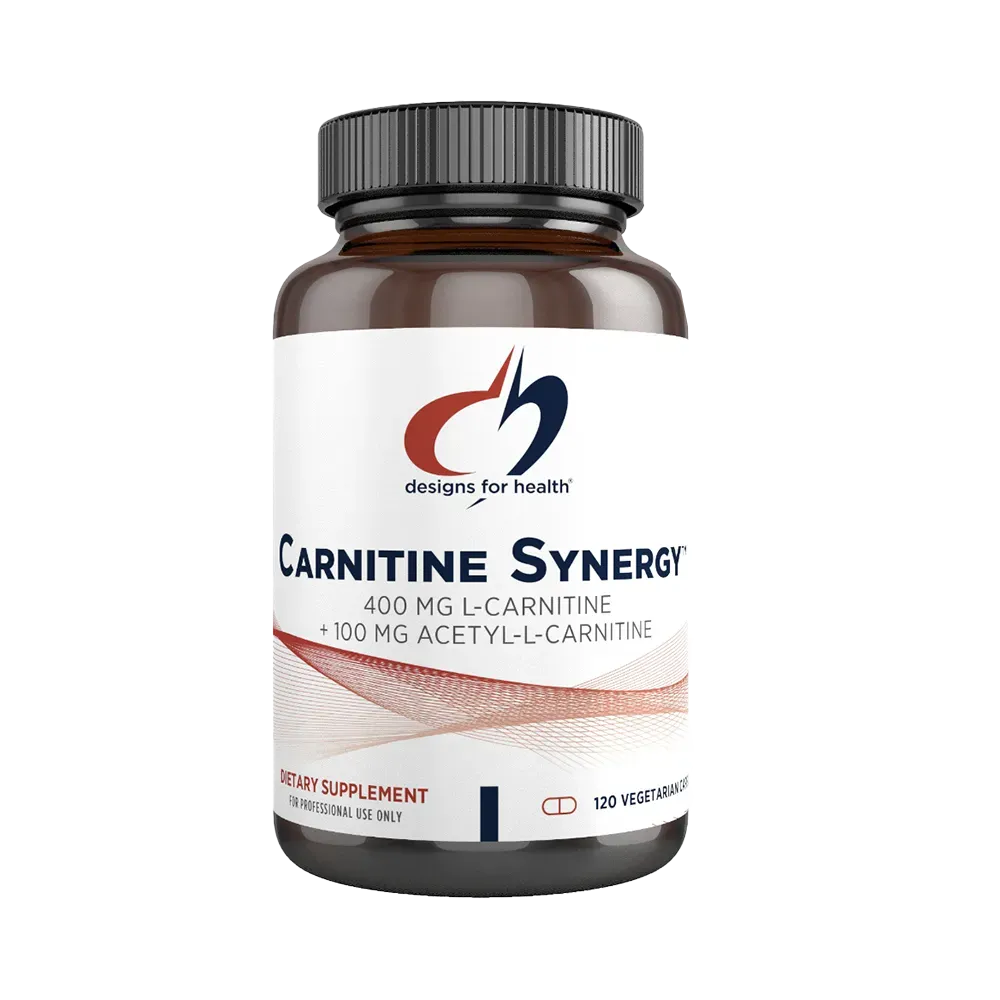
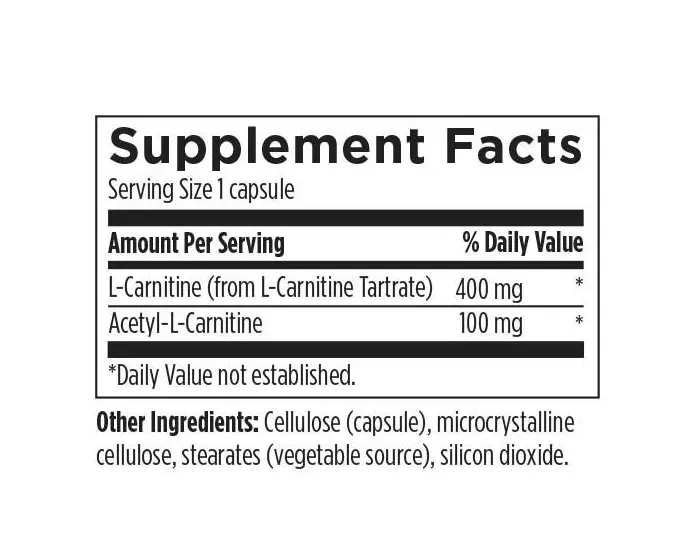
Carnitine Synergy™ - 120 capsules
L-Carnitine is an amino acid derivative with the essential function of helping fat enter the mitochondria, which are the
sites where fuel substrates—such as fats—are converted into energy inside cells. Dietary fats and stored body fat are
rich sources of energy, but they require carnitine for transport into the mitochondria. Simply put, without adequate
carnitine, fat cannot be used as a fuel source in the body. As a result of impaired fat metabolism, suboptimal carnitine
levels may interfere with fat loss, hinder athletic performance (both aerobic and anaerobic – cardio and resistance
training), and hamper the maintenance of healthy blood lipids, such as cholesterol and triglycerides.
Highlights:
L-carnitine occurs naturally in all foods, with animal proteins being the richest sources—particularly red meat and dark
meats, such as lamb, beef, and dark meat poultry. Very small amounts are present in plant foods. The human body
produces carnitine from the amino acids methionine and lysine, along with iron and vitamins B3 and B6. There are times,
however, when the physiologic demand for carnitine exceeds combined dietary intake and the body’s production
capacity.
• Vegetarians – Carnitine supplementation may be especially beneficial for those who do not ingest carnitine and
its precursor amino acids in adequate amounts, such as vegetarians, vegans, and those who limit consumption of
dark meats.
• Healthy Weight Management – Supplementation may be helpful for healthy weight management. Studies have
shown that supplementing with L-carnitine may assist the body’s ability to burn fat, even in people who are not
overtly deficient. It may be particularly beneficial when combined with a low-carbohydrate diet and exercise.
• Exercise Support – Carnitine is excellent for supporting exercise performance. It can help preserve lean body mass,
encourage the body to burn fat rather than glucose (glycogen) during exercise, and enhance exercise performance.
By helping to provide sustained fuel to the mitochondria, carnitine supplementation may help delay the point at
which an athlete “feels the burn” from lactic acid buildup in the muscles, facilitating exercise at a higher intensity
for a longer period of time. It may be especially effective among athletes consuming a lower-carbohydrate diet,
wherein the body’s larger muscle groups are fueled predominantly by fats.
• Cardiovascular Support – Carnitine helps to support healthy blood lipid levels and promotes a healthy cardiovascular system. The heart is one of the hardest working muscles in the body, and is fueled primarily by fats. Due
to its very high concentration of mitochondria, an adequate supply of carnitine is crucial for proper heart muscle
function.
Recommended Use:
As a dietary supplement, take one capsule per day before meals, or as directed by your health care practitioner.
sites where fuel substrates—such as fats—are converted into energy inside cells. Dietary fats and stored body fat are
rich sources of energy, but they require carnitine for transport into the mitochondria. Simply put, without adequate
carnitine, fat cannot be used as a fuel source in the body. As a result of impaired fat metabolism, suboptimal carnitine
levels may interfere with fat loss, hinder athletic performance (both aerobic and anaerobic – cardio and resistance
training), and hamper the maintenance of healthy blood lipids, such as cholesterol and triglycerides.
Highlights:
L-carnitine occurs naturally in all foods, with animal proteins being the richest sources—particularly red meat and dark
meats, such as lamb, beef, and dark meat poultry. Very small amounts are present in plant foods. The human body
produces carnitine from the amino acids methionine and lysine, along with iron and vitamins B3 and B6. There are times,
however, when the physiologic demand for carnitine exceeds combined dietary intake and the body’s production
capacity.
• Vegetarians – Carnitine supplementation may be especially beneficial for those who do not ingest carnitine and
its precursor amino acids in adequate amounts, such as vegetarians, vegans, and those who limit consumption of
dark meats.
• Healthy Weight Management – Supplementation may be helpful for healthy weight management. Studies have
shown that supplementing with L-carnitine may assist the body’s ability to burn fat, even in people who are not
overtly deficient. It may be particularly beneficial when combined with a low-carbohydrate diet and exercise.
• Exercise Support – Carnitine is excellent for supporting exercise performance. It can help preserve lean body mass,
encourage the body to burn fat rather than glucose (glycogen) during exercise, and enhance exercise performance.
By helping to provide sustained fuel to the mitochondria, carnitine supplementation may help delay the point at
which an athlete “feels the burn” from lactic acid buildup in the muscles, facilitating exercise at a higher intensity
for a longer period of time. It may be especially effective among athletes consuming a lower-carbohydrate diet,
wherein the body’s larger muscle groups are fueled predominantly by fats.
• Cardiovascular Support – Carnitine helps to support healthy blood lipid levels and promotes a healthy cardiovascular system. The heart is one of the hardest working muscles in the body, and is fueled primarily by fats. Due
to its very high concentration of mitochondria, an adequate supply of carnitine is crucial for proper heart muscle
function.
Recommended Use:
As a dietary supplement, take one capsule per day before meals, or as directed by your health care practitioner.
$100.16
Carnitine Synergy™ - 120 capsules—
$100.16
Description
L-Carnitine is an amino acid derivative with the essential function of helping fat enter the mitochondria, which are the
sites where fuel substrates—such as fats—are converted into energy inside cells. Dietary fats and stored body fat are
rich sources of energy, but they require carnitine for transport into the mitochondria. Simply put, without adequate
carnitine, fat cannot be used as a fuel source in the body. As a result of impaired fat metabolism, suboptimal carnitine
levels may interfere with fat loss, hinder athletic performance (both aerobic and anaerobic – cardio and resistance
training), and hamper the maintenance of healthy blood lipids, such as cholesterol and triglycerides.
Highlights:
L-carnitine occurs naturally in all foods, with animal proteins being the richest sources—particularly red meat and dark
meats, such as lamb, beef, and dark meat poultry. Very small amounts are present in plant foods. The human body
produces carnitine from the amino acids methionine and lysine, along with iron and vitamins B3 and B6. There are times,
however, when the physiologic demand for carnitine exceeds combined dietary intake and the body’s production
capacity.
• Vegetarians – Carnitine supplementation may be especially beneficial for those who do not ingest carnitine and
its precursor amino acids in adequate amounts, such as vegetarians, vegans, and those who limit consumption of
dark meats.
• Healthy Weight Management – Supplementation may be helpful for healthy weight management. Studies have
shown that supplementing with L-carnitine may assist the body’s ability to burn fat, even in people who are not
overtly deficient. It may be particularly beneficial when combined with a low-carbohydrate diet and exercise.
• Exercise Support – Carnitine is excellent for supporting exercise performance. It can help preserve lean body mass,
encourage the body to burn fat rather than glucose (glycogen) during exercise, and enhance exercise performance.
By helping to provide sustained fuel to the mitochondria, carnitine supplementation may help delay the point at
which an athlete “feels the burn” from lactic acid buildup in the muscles, facilitating exercise at a higher intensity
for a longer period of time. It may be especially effective among athletes consuming a lower-carbohydrate diet,
wherein the body’s larger muscle groups are fueled predominantly by fats.
• Cardiovascular Support – Carnitine helps to support healthy blood lipid levels and promotes a healthy cardiovascular system. The heart is one of the hardest working muscles in the body, and is fueled primarily by fats. Due
to its very high concentration of mitochondria, an adequate supply of carnitine is crucial for proper heart muscle
function.
Recommended Use:
As a dietary supplement, take one capsule per day before meals, or as directed by your health care practitioner.
sites where fuel substrates—such as fats—are converted into energy inside cells. Dietary fats and stored body fat are
rich sources of energy, but they require carnitine for transport into the mitochondria. Simply put, without adequate
carnitine, fat cannot be used as a fuel source in the body. As a result of impaired fat metabolism, suboptimal carnitine
levels may interfere with fat loss, hinder athletic performance (both aerobic and anaerobic – cardio and resistance
training), and hamper the maintenance of healthy blood lipids, such as cholesterol and triglycerides.
Highlights:
L-carnitine occurs naturally in all foods, with animal proteins being the richest sources—particularly red meat and dark
meats, such as lamb, beef, and dark meat poultry. Very small amounts are present in plant foods. The human body
produces carnitine from the amino acids methionine and lysine, along with iron and vitamins B3 and B6. There are times,
however, when the physiologic demand for carnitine exceeds combined dietary intake and the body’s production
capacity.
• Vegetarians – Carnitine supplementation may be especially beneficial for those who do not ingest carnitine and
its precursor amino acids in adequate amounts, such as vegetarians, vegans, and those who limit consumption of
dark meats.
• Healthy Weight Management – Supplementation may be helpful for healthy weight management. Studies have
shown that supplementing with L-carnitine may assist the body’s ability to burn fat, even in people who are not
overtly deficient. It may be particularly beneficial when combined with a low-carbohydrate diet and exercise.
• Exercise Support – Carnitine is excellent for supporting exercise performance. It can help preserve lean body mass,
encourage the body to burn fat rather than glucose (glycogen) during exercise, and enhance exercise performance.
By helping to provide sustained fuel to the mitochondria, carnitine supplementation may help delay the point at
which an athlete “feels the burn” from lactic acid buildup in the muscles, facilitating exercise at a higher intensity
for a longer period of time. It may be especially effective among athletes consuming a lower-carbohydrate diet,
wherein the body’s larger muscle groups are fueled predominantly by fats.
• Cardiovascular Support – Carnitine helps to support healthy blood lipid levels and promotes a healthy cardiovascular system. The heart is one of the hardest working muscles in the body, and is fueled primarily by fats. Due
to its very high concentration of mitochondria, an adequate supply of carnitine is crucial for proper heart muscle
function.
Recommended Use:
As a dietary supplement, take one capsule per day before meals, or as directed by your health care practitioner.